The Cable Car to Velika Planina
Silver-shingled huts scattered across a high plateau, cheese made the old way, and the Kamnik Alps for a horizon — an hour from the capital.
The short version
- The cable car rises from the Kamniška Bistrica valley, with a chairlift continuing toward the plateau top — around €24–26 return for the combination; times and prices at velikaplanina.si.
- Without a car it takes commitment: bus from Ljubljana to Kamnik (about half an hour, frequent), then a thin local connection or taxi for the last stretch to the valley station — check the day’s times at arriva.si before you set out.
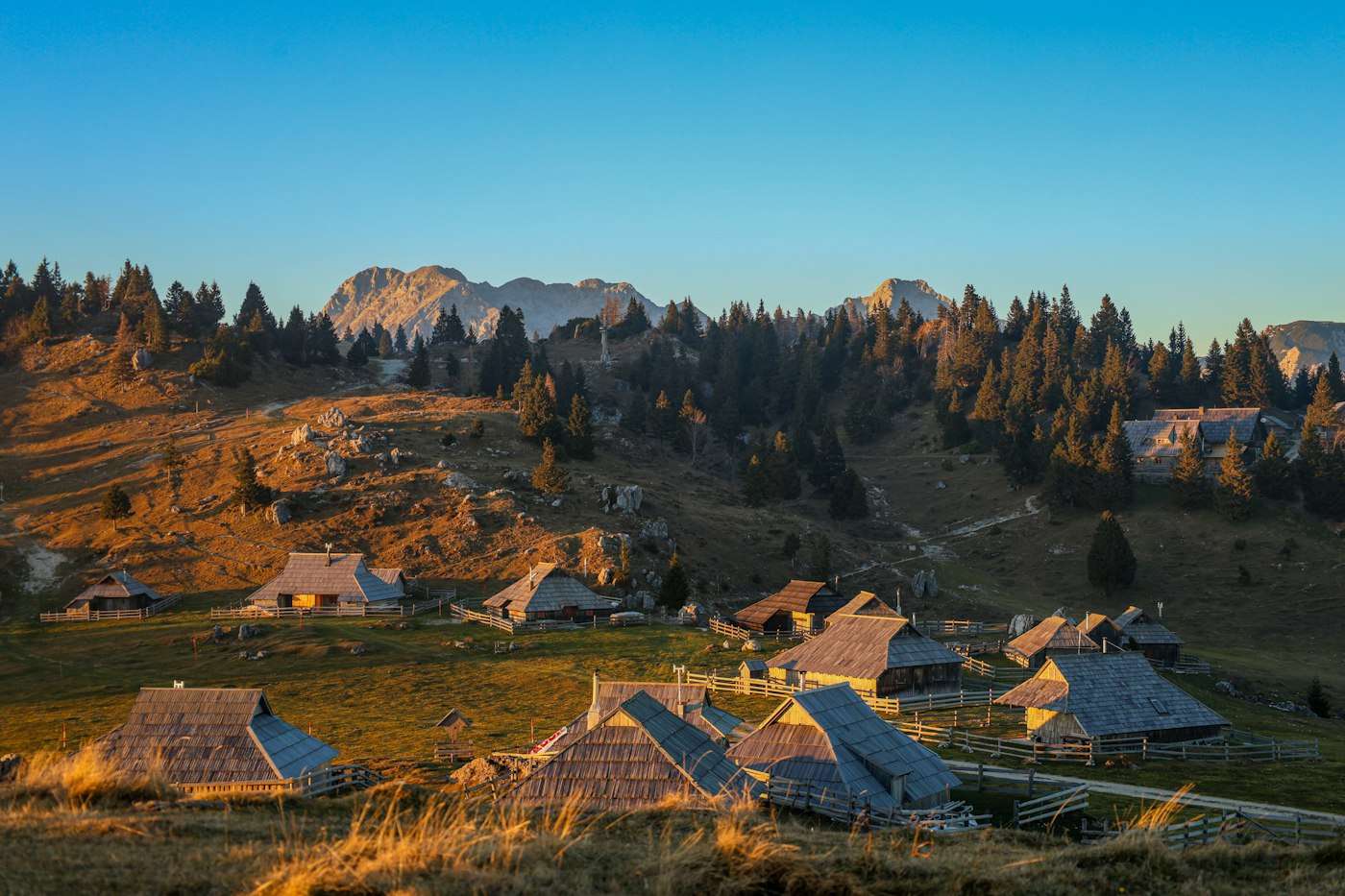
- The plateau holds nearly 150 wooden huts with silvered shingle roofs across three linked pastures at around 1,600 m — by common count the largest surviving herders’ settlement in Europe.
- Mid-June to mid-September is the living season: herders bring the cattle up, the dairies work, and the huts sell sour milk and trnič — the decorated hard cheese pressed in carved wooden molds.
- The classic loop — upper station, settlement, the rebuilt Chapel of Our Lady of the Snows, and the viewpoint over the Kamnik-Savinja Alps — takes two to three unhurried hours; the cable car runs year-round for snowshoe winters.

Getting there
Drivers reach the Kamniška Bistrica valley station in about 45 minutes from Ljubljana via Kamnik and Stahovica; parking costs a few euros. By public transport, frequent buses run Ljubljana–Kamnik in about half an hour, but the final leg to the cable car is served only patchily — a local bus on some summer timetables, otherwise a taxi from Kamnik. Check the return connection before committing, or treat the round trip as a tour or shared-ride day. The cable car itself runs year-round on a posted timetable, with the chairlift seasonal above it.
The day
Ride up through the forest wall and step out onto another logic entirely: open pasture, limestone outcrops, and the huts — low ovals of grey shingle, built to shrug off wind and snow, scattered as their pastures dictated rather than in streets. Walk the main settlement first; in season the herders are working, the cattle bells set the soundtrack, and a hut kitchen will sell you sour milk with maize porridge or the trnič cheese whose carved decorations once served as love tokens — herders pressed pairs and gave one to their chosen. The Chapel of Our Lady of the Snows, burned in the war and rebuilt by the herders, anchors the plateau’s far rise. Climb to Gradišče, the high point, for the Kamnik-Savinja Alps in full spread, then loop back through Mala and Gojška planina if your legs vote yes. Two to three hours covers the classic circuit; the silence between cowbells is the actual attraction, so budget time to sit in it before the ride down.
When to go
Mid-June to mid-September for the living settlement — herders, dairies, and open hut kitchens; that is the version worth planning around. Early June and late September keep the landscape and lose the cattle. Winter turns the plateau into a snowshoe and sledding field with the cable car still running — beautiful, stark, and a different trip entirely. In every season, mornings beat afternoons on weather and light both.
Frequently Asked Questions
How do you get to Velika Planina from Ljubljana?
By car, about 45 minutes to the cable-car station via Kamnik. By bus, Ljubljana–Kamnik is easy and frequent, but the last stretch to the valley station is thinly served — check times or plan a taxi. The cable car and seasonal chairlift do the climbing.
What does it cost?
Around €24 return for the cable car, €26 with the chairlift (a little more in high season), children about €15, family tickets around €60. The plateau itself is free to walk.
When are the herders actually there?
Mid-June to mid-September, when the cattle summer on the pasture and the dairies work. Outside those months the huts stand picturesque but shuttered — still a fine walk, no longer a living settlement.
What is trnič?
A hard cheese of the plateau, dried and decorated with patterns pressed from carved wooden molds — traditionally made in pairs, one kept and one given as a herder’s love token. Hut kitchens and valley shops sell it in season.
Is it doable in winter?
Yes — the cable car runs year-round, and the plateau becomes snowshoeing and sledding country with a small ski lift. Check conditions and daylight before going; the settlement sleeps, but the huts under snow are the postcard Slovenia prints most.