Ljubljana Day Tours
I’m Serious Day Tour Man AI, your day trip expert. Ask me anything — where to go, how to get there, and what’s actually worth your day.
Ljubljana may be Europe’s best day-trip base per square kilometer: an alpine lake with an island church forty minutes away, two world-class cave systems in opposite styles under the Karst, a Venetian port town an hour southwest, and an emerald river valley over a mountain pass. Nothing on this list is more than two hours out, and half of it is under one.
The two decisions that shape most itineraries — which lake, and which cave — get sorted honestly below, because the famous answer and the better answer aren’t always the same one.
Here’s what’s worth a day, with real times and honest trade-offs.

Popular Day Trips
Lake Bled
The Hourly Bus, the Pletna to the Island
Postojna & Predjama
The Cave Train, the Jacket Rule
Piran
The Garage Outside the Walls, a Square That Was a Harbor
Lake Bled & Vintgar Gorge — The Postcard, Managed
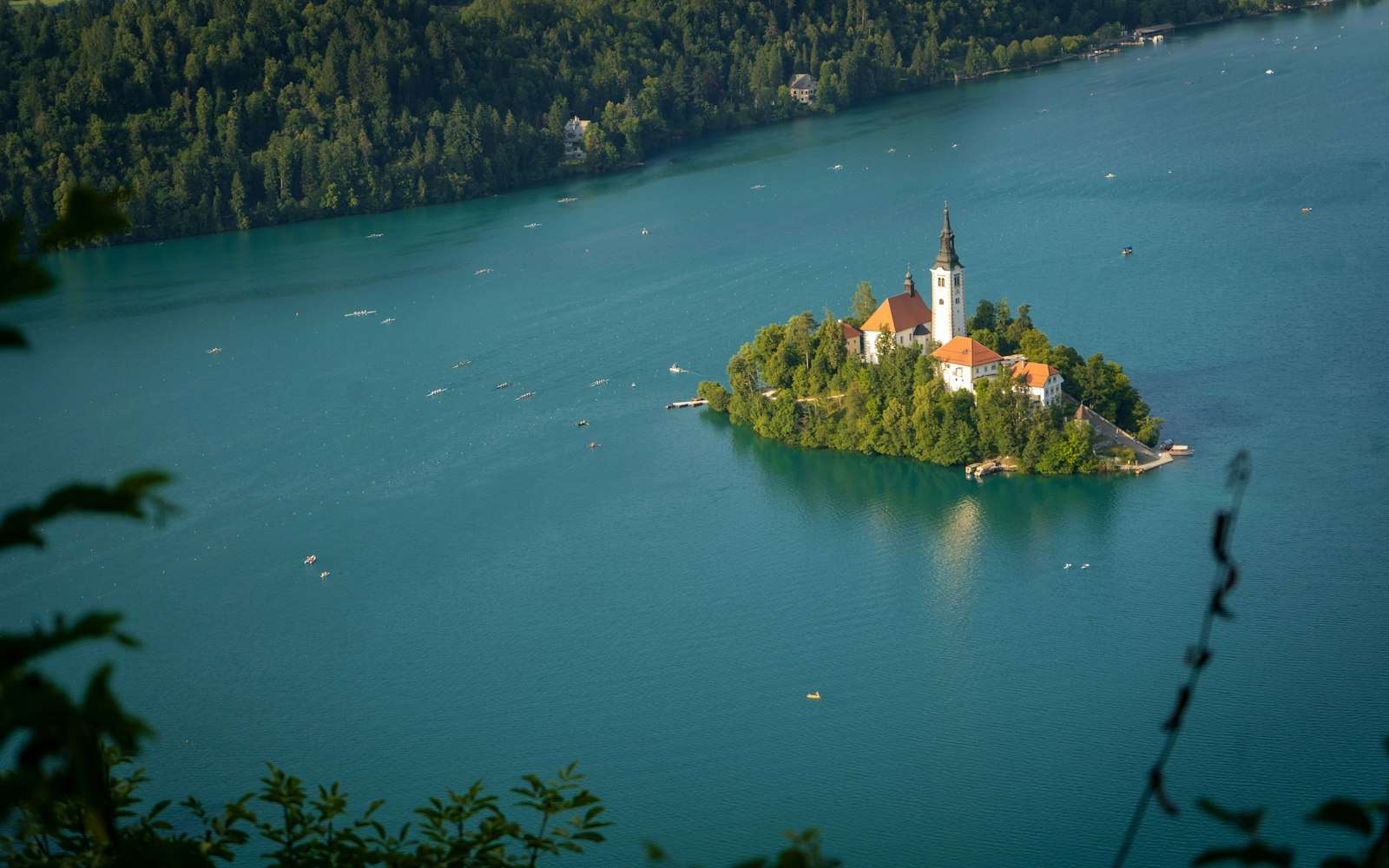
Forty minutes northwest, Bled is exactly what the photographs promise: the island church in the lake, the cliff-top castle, the Julian Alps behind. The circuit: walk or rent a rowboat to the island (the traditional pletna boats pole across on no fixed schedule; the self-rowed version is half the price and all the fun), climb the 99 steps to the church, ring the wishing bell, and take the castle for the view rather than the museum. The six-kilometer lakeshore walk is flat, free, and the best hour here. Kremšnita — the cream cake invented at the lakeside hotel — is the obligatory calorie.
Vintgar Gorge, ten minutes from Bled, is the morning add-on that outshines the lake for many: 1,600 meters of wooden walkways pinned to the rock above the glass-clear Radovna river. Know the current system: entry is ticketed (about €10 for adults), the route runs one-way with themed return trails, helmets are provided and mandatory, and access works through the central parking hub with an electric shuttle — buy the digital ticket ahead in summer, and go at opening before the walkways fill.
The honest note: Bled is beautiful and knows it — July and August run at capacity. The early start solves most of it, and Bohinj below solves the rest.
Read the full Lake Bled day-trip page.
The Cave Question — Postojna or Škocjan
Slovenia’s Karst offers two great caves an hour southwest. They are different products.
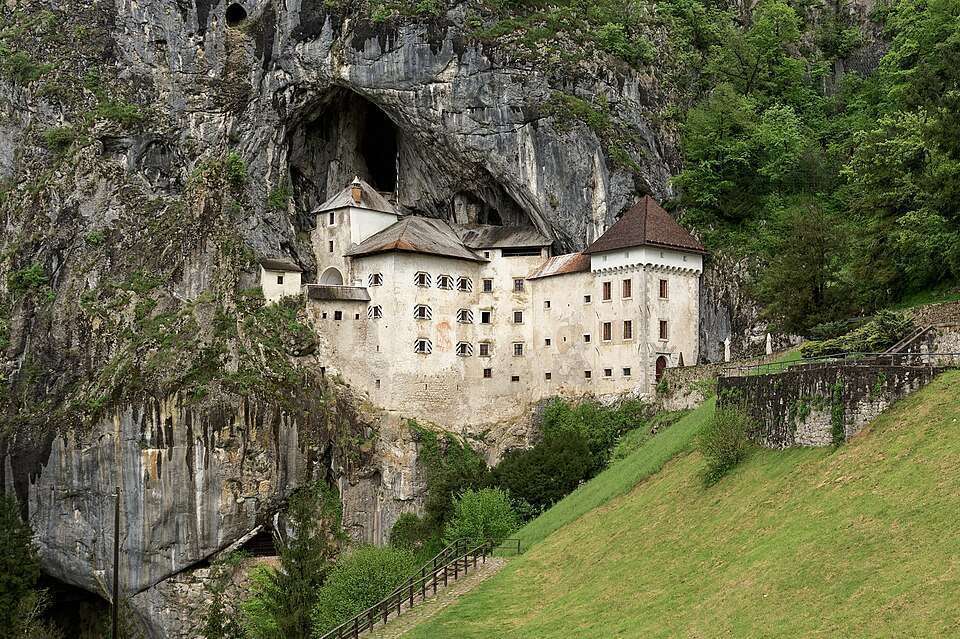
Postojna is the famous one: an electric train rides you three kilometers into the mountain, the formations run theatrical and floodlit, the concrete paths suit everyone including strollers, and the olm — the blind, pale “baby dragon” salamander — has its own aquarium. It pairs with Predjama Castle ten minutes away, the Renaissance fortress built into a cliff-mouth cave, which is the region’s best single photograph. Book both online; summer slots fill.
Škocjan is the UNESCO one: a guided-only walk into one of the world’s largest underground canyons, where the Reka river roars below and the path crosses the Cerkvenik Bridge 47 meters above the water. The mechanics: tours run daily in a 10 a.m.–3 p.m. window, tickets sell out days ahead in summer on the park’s official site, arrive 20 minutes early, expect 500-plus steps, a constant 12 degrees, and no photography in the canyon itself.
The sort: Postojna for families, ease, and spectacle; Škocjan for scale, drama, and the feeling of an expedition. Purists pick Škocjan and aren’t wrong; doing both in one Karst day is possible and slightly mad.
Read the full Postojna & Predjama day-trip page.
Lake Bohinj — The Locals’ Lake
Thirty minutes past Bled, inside Triglav National Park, Bohinj is the answer to Bled’s crowds: a bigger lake, no island, no castle, and a fraction of the coach traffic. This is where Slovenes go, which tells you the essentials.
The circuit: Savica Waterfall’s stepped climb to the double cascade that feeds the lake, the Vogel cable car up to 1,535 meters for the Julian Alps panorama (a ski hill in winter, a viewpoint-and-hike station in summer), the church of St. John the Baptist at the lake’s outflow with its frescoed interior and the stone bridge photo, and swimming — Bohinj is genuinely swimmable all summer, colder and cleaner-feeling than Bled, with grassy shores instead of managed beaches.
The formats: paddleboard and kayak rentals at Ribčev Laz, the lakeshore trail for the unhurried, and the Mostnica Gorge walk from Stara Fužina for a quieter Vintgar without the ticket line. Frame it honestly: Bled is the postcard, Bohinj is the swim. Ambitious days do Bled’s island at 8, Vintgar at 10, and Bohinj all afternoon — the three stack cleanly.
Piran & the Coast — The Venetian Hour
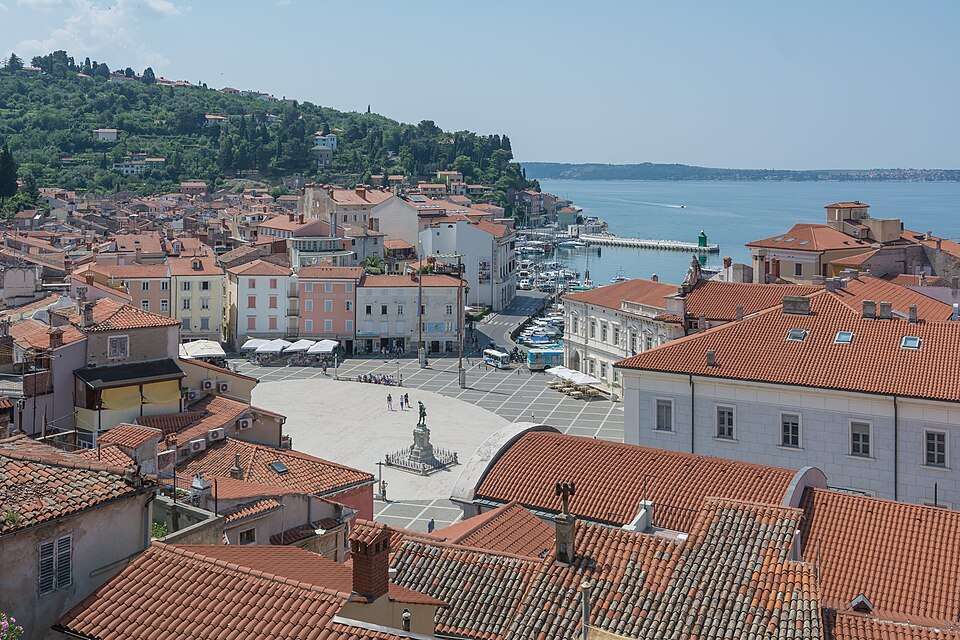
Just over an hour southwest, Slovenia’s 46 kilometers of coastline concentrate their charm into Piran: a Venetian Gothic town on a narrow peninsula, all marble squares, campanile, and seafood at the water’s edge. Tartini Square is the marble living room, the town walls climb to the postcard view over terracotta roofs to the Adriatic, and the church bell tower — a miniature San Marco — earns its climb.
The mechanics: the old town is car-free, so park at the garage outside and walk or shuttle in. Lunch is the point — seafood along the Prešernovo nabrežje waterfront, with the fried-calamari-and-Malvazija combination as the standard order. Add the Sečovlje salt pans south of town, the medieval salt-harvesting landscape still worked traditionally (the salt-shop fleur de sel is the correct souvenir), or the Fiesa-to-Piran coastal path for the pre-lunch walk.
One honest note: swimming here is off concrete platforms and rocky entries, not sand — the Adriatic is lovely and the beaches are not the argument. Piran is a half-day town stretched to a full day by lunch done properly, and summer weekends fill the parking early.
Read the full Piran day-trip page.
The Soča Valley — The Emerald Stretch
Two hours northwest lies the day that earns its road. The Soča river runs an implausible glacial turquoise through a valley of WWI history and adrenaline sports, and in summer the route over the Vršič Pass — Slovenia’s highest road, fifty hairpins built by WWI prisoners — is half the show.
The stack: the Great Soča Gorge and the footbridges where the color is at its most unreal, rafting and kayaking from Bovec (the class rises with the spring snowmelt; summer runs family-friendly), the Kobarid museum — one of Europe’s best WWI museums, telling the Isonzo Front and the battle Hemingway wrote into A Farewell to Arms — and Kozjak Waterfall’s chamber-like plunge pool, a short walk from Kobarid.
The honest math: this is the region’s marathon at ten-plus hours with mountain driving. The pass closes in snow (the Predel or tunnel routes serve winter). It rewards drivers who like driving and travelers on second visits; first-timers with one day should take Bled-Bohinj instead. The overnight-in-Bovec version converts it from a sprint into the best two days in the country.
The Dragons, the Market & Ljubljana Itself
The capital itself is a half-day masterpiece: Plečnik’s Triple Bridge and riverside colonnades, the dragons on Dragon Bridge (the city’s mascot, photographed from the upstream corner), the funicular to the castle for the red-roof panorama, and the Ljubljanica embankments where café society conducts its daily parliament. The center is car-free, walkable in an afternoon, and best at aperitivo hour when the river terraces fill.
The market rules: the Central Market’s colonnade and square run mornings except Sunday, and Friday’s Open Kitchen (Odprta kuhna, spring through autumn) turns the market square into the country’s best food festival — go hungry. The eating curriculum beyond it: štruklji (rolled dumplings, sweet or savory), the Carniolan sausage with protected status and mustard, and Slovenia’s quietly excellent wine — Malvazija from the coast, Rebula from Goriška Brda — poured by the glass everywhere. Tap water is excellent and free; asking for it is normal.
The rest: Metelkova’s graffiti-covered alternative quarter for the evening curiosity, Tivoli Park for the run, and the boat cruise on the Ljubljanica as the gentlest hour in town. Season math: May–June and September are the windows — warm, green, uncrowded; July–August brings heat and Bled’s peak crowds (start early everywhere); winter is short-dayed but the Christmas lights along the river, designed by artists rather than committees, are genuinely worth the cold.
Frequently Asked Questions
Which is better from Ljubljana — Bled or Bohinj?
Bled for the postcard: island, castle, cream cake, crowds. Bohinj for the swim: bigger, wilder, and mostly Slovene. They’re thirty minutes apart, so the ambitious day does Bled early and Bohinj all afternoon.
Postojna or Škocjan caves?
Postojna for ease and spectacle — train ride, floodlit formations, stroller-friendly, pairs with Predjama Castle. Škocjan for the UNESCO drama: a guided walk over a 47-meter bridge inside one of the world’s largest underground canyons, 500-plus steps, tickets days ahead in summer.
Do you need tickets for Vintgar Gorge?
Yes — about €10, one-way route with themed return trails, mandatory helmets provided, and access via the central parking hub and electric shuttle. Buy the digital ticket ahead in summer and go at opening.
Is the Soča Valley doable as a day trip?
Yes, as a ten-plus-hour marathon over the Vršič Pass — emerald river, Bovec rafting, and the Kobarid WWI museum. First-timers with one day should take Bled-Bohinj; the Soča deserves the overnight.
Is Piran worth it from Ljubljana?
Yes — an hour to a Venetian marble town on the Adriatic, best built around a long seafood lunch. Park outside the car-free old town, climb the bell tower, and skip the beach expectations: it’s platforms and rocks, not sand.